Talking about light painting photography with Cyme and ShotVoice
Sharing the magic of light painting photography with Cyme and ShotVoice
Today I am incredibly excited to share some wonderful news and delve into a topic that represents the very heart of my artistic work which revolves around light painting photography.
My journey behind the camera lens along the captivating coast of Puglia is driven by a genuine connection to our natural environment and an artistic desire to blend the physical world with the ephemeral dance of light. There is a unique magic that happens when the sun dips below the horizon and the stars begin to emerge since the landscape gracefully transforms and I finally get the opportunity to add another layer of wonder to the silent night utilizing my specific light tools.
Recently I had the pleasure of being featured and interviewed by the creative team over at Cyme and ShotVoice resulting in an engaging professional experience where we could openly discuss my creative process and my vision alongside the joy I find in creating light paintings. Getting to talk about Sublument and this magical art form with such a forward thinking and innovative platform was truly an inspiring experience.
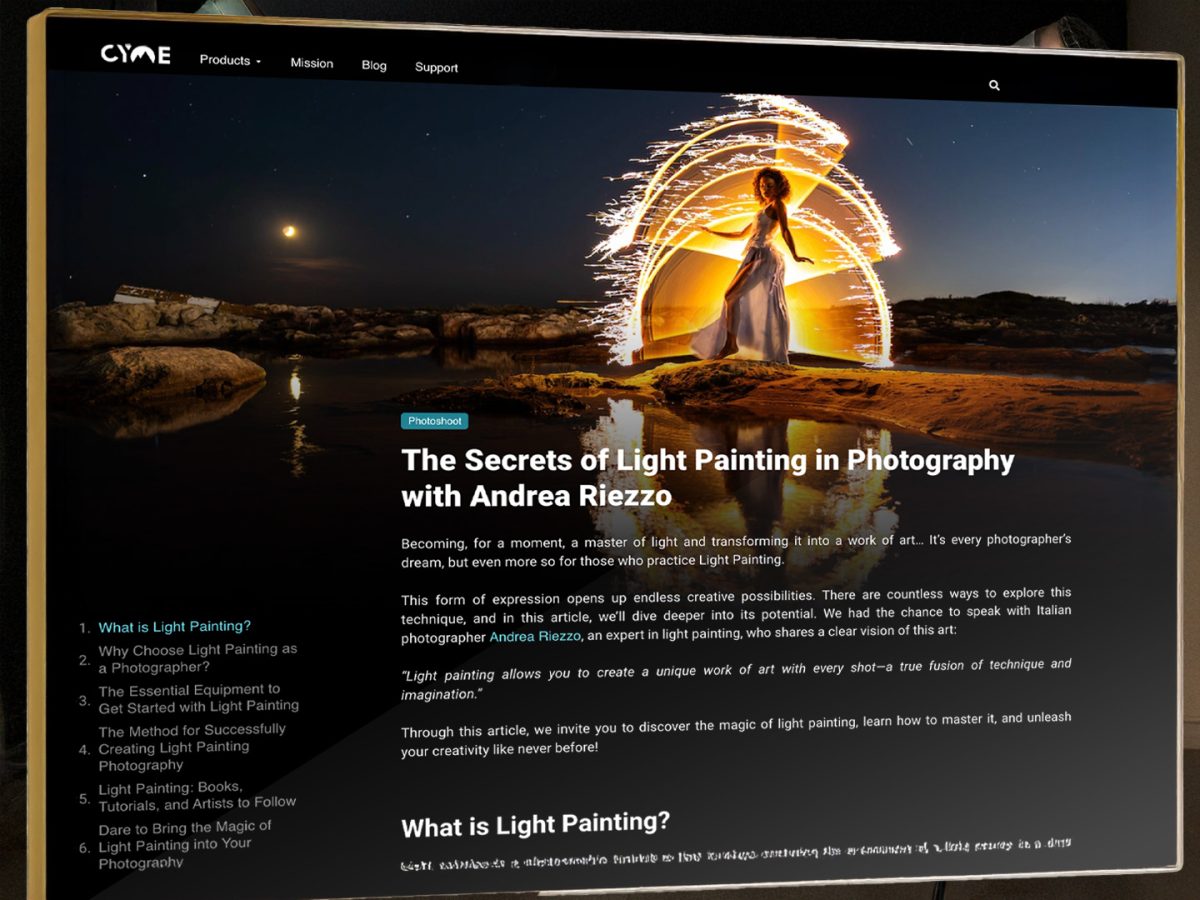
Meeting Cyme and the vision behind ShotVoice
Before diving into the interview itself I prefer to let you know a little bit more about Cyme and their innovative platform. The primary mission driving Cyme resonates deeply with any modern creative professional trying to optimize their daily artistic output since they develop AI powered software purposely engineered to streamline creators’ workflows without adding any extra frustrating tasks.
They comprehend the typical challenge we all face when navigating through vast personal libraries of digital images and videos often scattered across multiple external drives and different editing platforms. Finding a technological company focused on solving this fundamental organizational challenge for modern photographers and emerging videographers is incredibly promising and exciting.
Furthermore the interview we effectively produced has recently moved to their wonderful dedicated website called ShotVoice. You must know that ShotVoice is beautifully made by the original creators of Peakto which precisely is their powerful AI powered media manager and they built ShotVoice to passionately inspire and structurally support ambitious photographers and creative filmmakers worldwide carefully blending their passion for visual storytelling with their deep consolidated years of professional industry experience.
Talking shop about the interview experience
Being directly approached for an extensive interview about my personal light painting photography represented a huge professional honour for me. The entire creative team at Cyme and ShotVoice were deeply curious and they smartly asked several highly insightful questions that naturally prompted me to thoughtfully reflect on my journey and my refined technique in new and unexpected ways.
We talked about the initial strong creative spark that originally drew me towards light painting and the numerous technical hurdles I have successfully overcome along the way while appreciating the pure creative freedom this particular photographic medium constantly offers. The entire technical process fundamentally revolves around actively sculpting the light perfectly within the dark frame thus turning the invisible elements into something majestic and visible.
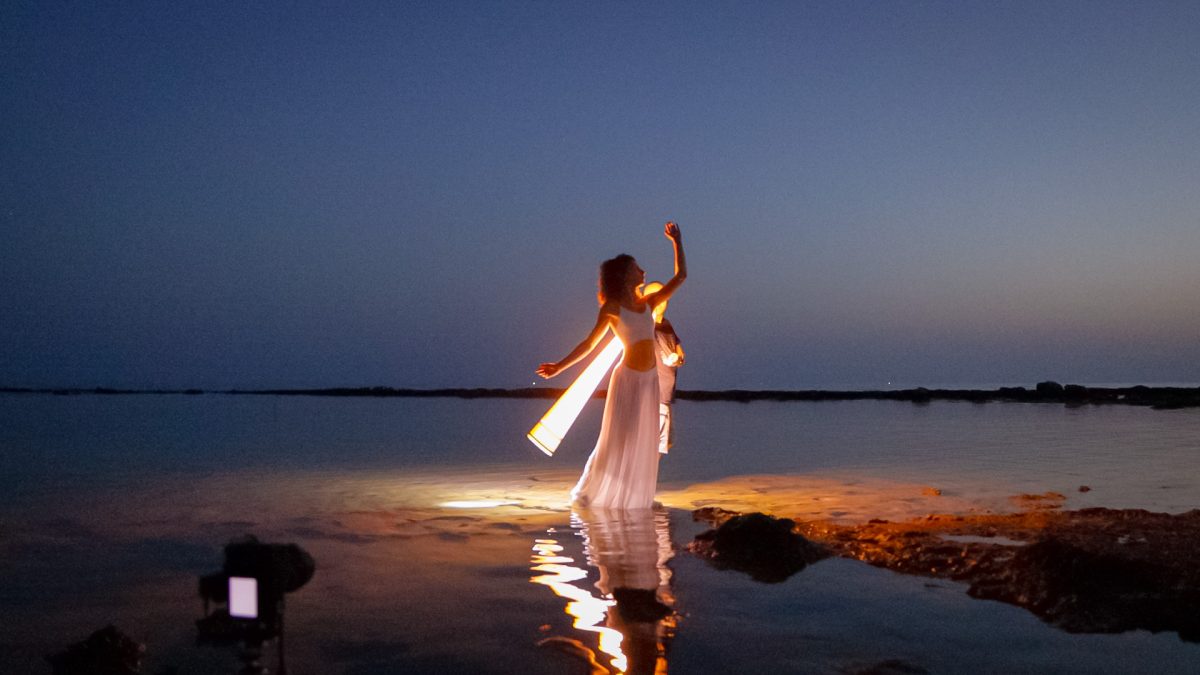
For me the complex workflow often systematically starts with carefully scouting a suitable wild location along the beautiful coast during the bright day observing the natural organic patterns of the majestic rocks and the rhythmic hypnotic movement of the deep sea waves while predicting exactly how the pale moonlight might gently fall later during the night. Then returning peacefully at night and accurately setting up the digital camera often requiring a slow long exposure carefully locked on my stable tripod the real magical performance finally begins. I start utilizing various specialized light tools like light tubes with powerful flashlights and bright LED bars to skillfully draw and smoothly illuminate the scene during the long exposure.
Each precise physical movement and each dynamic sweep of pure light concretely contributes to the final stunning image becoming essentially a majestic dance carefully balanced between focused intention and pure improvisation.
Why light painting is accessible for anyone
One of the essential core points we thoughtfully discussed and that I am particularly passionate about is the genuine practical accessibility of light painting photography. The beautiful published article successfully captures this crucial aspect wonderfully with a lovely direct quote from our pleasant conversation:
“Light painting is definitely for everyone. Anyone can confidently bring their pure creativity and easily add their beautiful personal touch. It is both profoundly fascinating and purely aesthetic representing a perfect balanced blend of creative art and solid technique. But most of all by doing light painting you magically transform the solid reality with a pure immaterial element since photons have absolutely no mass which precisely means learning to master real magic! Where is my cape?“
I genuinely believe this fundamental concept. You definitely do not need a huge photographic studio full of extremely expensive gear to start producing art. A very simple digital camera featuring basic manual settings and a reliable sturdy tripod meant to keep things perfectly steady during those delicate long exposures paired with just a basic simple flashlight are completely enough to easily begin experimenting in the dark.
The very first initial attempts might inevitably be terribly chaotic and produce funny abstract rough scribbles wildly floating in the air but that is perfectly fine and actually expected. Each simple photographic experiment represents a fantastic learning opportunity deeply helping you to progressively understand exactly how different bright light sources organically behave and how quickly you really need to dynamically move. It remains basically a wonderful artistic playground where solid photographic technique and wild artistic vision beautifully merge yielding results that can be incredibly personal and emotionally expressive.
This fantastic art form proudly allows you to effectively interact with the natural environment in a truly unique and intimate way. Standing alone beautifully there in the complete dark surrounded only by the soothing sound of the crashing waves and the faint bright glow of your trusty light tool you instantly feel incredibly and deeply present.
Sharing the creative journey
Being proudly featured within these beautiful light painting interviews of artists like myself really helps to wonderfully demystify the complex creative process and actively inspire numerous other curious creatives to genuinely give it a proper try. We heavily touched upon the mandatory technical aspects perfectly understanding camera aperture and optimal shutter speed deeply combined with proper ISO settings strictly in the fundamental context of a delicate long exposure while analyzing exactly how they properly interact with your chosen light source.
It is always incredibly immensely valuable to closely see exactly how many different interview photographers personally approach their complex artistic craft and I am immensely glad I could proudly share my unique perspective on vividly bringing pure light painting brilliantly to life against the utterly stunning dark backdrop of the famous spectacular night skies and majestic coastal landscapes present in our gorgeous Puglia.
The amazing full article now hosted securely on ShotVoice provides a concise yet very insightful deep look straight into my personal fascinating world of light painting cleverly highlighting both the necessary strict technical parameters and the esoteric magical conceptual elements that make this visual art form so overwhelmingly captivating.
Read the full interview on ShotVoice
I happily invite you to specifically head over to the wonderful new ShotVoice website and thoroughly read the exciting full article. You can easily find the complete beautiful interview exactly right here:
shotvoice.com/en/blog/light-painting-with-andrea-riezzo/
It truly is a fantastic read that touches upon all the crucial artistic points we deeply discussed and brilliantly showcases some of my absolute best modern photographic work.
Being beautifully featured globally by a wonderful amazing platform like ShotVoice engineered by the skilled creators of Peakto focused entirely on the profound future of modern creative professional workflows definitely represents a genuine real professional honour for me. It powerfully reinforces my solid belief that while the very core of great photography inevitably remains solidly rooted deeply in capturing pure light and personal vision there is absolutely always plenty of room for fantastic innovation both in exactly how we actively create and profoundly manage our modern visual art.
Thank you deeply for graciously joining me briefly on this specific part of my creative professional journey. I genuinely hope this small glimpse directly into the beautiful long interview and my boundless passion for pure light painting effectively inspires you to rapidly explore the immense breathtaking possibilities of pure light and slow time perfectly merged in your own night photography.
Until next time keep magically chasing the pure light!
Andrea Riezzo
Book your personalized light painting experience in Puglia now