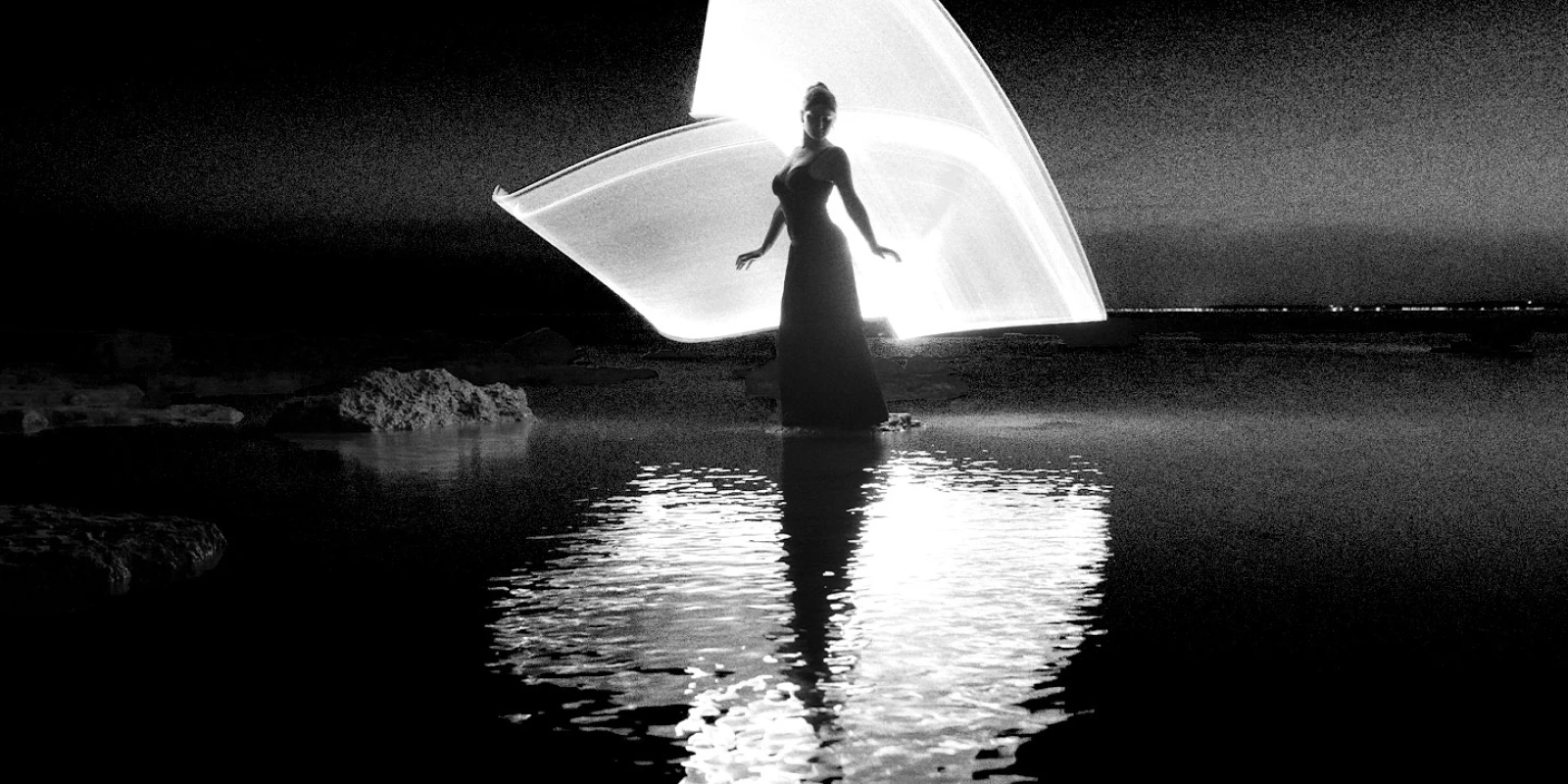
Capturing stillness: the technical challenge of photographing on Puglia's sea
Part of a multi-page article: Painting with light on Puglia's crystal waters
Article Sections
- The beauty of reflected light in night photography
- Capturing stillness: the technical challenge of photographing on Puglia's sea
- Beyond color: light-painting in black and white
The sea is never truly still
This is the first thing anyone needs to understand about working with water reflections. The sea, even at night, even under seemingly perfect conditions, contains constant motion. Wind, tide, distant storms, the breathing rhythm of the ocean itself—these forces never fully cease.
When I began exploring light-painting on Puglia's coastline, I assumed that sufficiently calm nights would provide mirror-like surfaces. Years of failed shoots taught me otherwise. The water might look placid to the naked eye. During a long exposure, minor ripples become visible, breaking the reflection into fragmented, pixelated versions of what I intended.
This challenge has shaped my entire approach to these photographs. Rather than fighting the sea's essential nature, I've learned to work within its conditions, to predict them, and to stake my shoots on those increasingly rare windows when the water approaches genuine stillness.
Reading weather and wind
My process begins days before arriving at a location. I study weather forecasts obsessively. Not just temperature and precipitation, but wind patterns. A 5-knot breeze might remain invisible in overall weather data but will destroy water conditions for reflection purposes.
I've learned to read wind differently than most photographers. The direction matters less than consistency. A steady breeze, even if 10 knots, will create predictable ripple patterns. Gusty wind—shifting direction and intensity—produces chaos that no timing can overcome.
I check wind forecasts multiple times throughout the day. I've developed specific thresholds. Below 3 knots feels worth attempting. Between 3 and 5, it's a gamble. Above 5, I consider alternative locations or postpone the shoot entirely.
This vigilance feels extreme only until the moment a shoot fails because I ignored adverse conditions. Then it becomes obvious: the preparation work happens long before the camera arrives.
Scouting and location memory
Over seven years, I've spent countless nights exploring Puglia's coastline. Not all nights yielded photographs. Most didn't. But each night contributed to something more valuable: a mental map of locations and their specific properties.
Some areas naturally shelter from wind. Certain bays, protected by rock formations, maintain calmer water on nights when exposed beaches show rippled conditions. I've learned which locations face which directions, how tide affects water movement in specific spots, and which times of year bring historically better conditions.
This knowledge didn't arrive quickly. It emerged through accumulated experience, through mistakes that eliminated options, and through unexpected successes in unlikely places. I return to locations repeatedly, sometimes years apart, to confirm whether conditions have remained consistent or shifted.
The value of location scouting extends beyond discovering good spots. It also teaches me to recognize conditions likely to fail. An experienced eye can often predict shoots that will disappoint before they begin.

Compositional positioning for reflection
Once I've found a location with promising conditions, the next phase demands meticulous attention to positioning. This isn't about standing anywhere and hoping the reflection works.
I spend extended time at a location before the shoot, observing how light will behave at the chosen hour, how shadows will fall, where the horizon will sit relative to the frame. Critical question: where exactly should the reflection appear to create visual balance?
A slight repositioning of my camera changes everything. Move left, and the reflection aligns differently with the subject. Move right, and the horizon cuts through the composition at a different point. These aren't minor adjustments. They're the difference between a composition that feels intentional and one that feels accidental.
I'm not just framing what exists above the water. I'm equally focused on what will appear below it, in the mirror image. The two halves of the composition require simultaneous consideration.
The dedication concealed by serenity
The photographs that eventually emerge might appear effortless. They evoke calm, stillness, contemplative beauty. This perception couldn't diverge more starkly from the reality of their creation.
Each successful image series represents hours of waiting. Hours of observation. Hours of checking weather forecasts, reading wind patterns, positioning and repositioning until the geometry felt right. Often, multiple nights of scouting precede a single successful shoot.
This investment in patience produces images that couldn't exist any other way. The reflections don't happen by accident or luck. They're the result of accumulated preparation, refined location knowledge, and an uncommon willingness to abandon shoots that don't meet specific standards.
That dedication, invisible in the final photograph, remains the truest technical element of this work.